
I’ve Used a Foldable Phone for Two Years — Here’s What Nobody Tells You
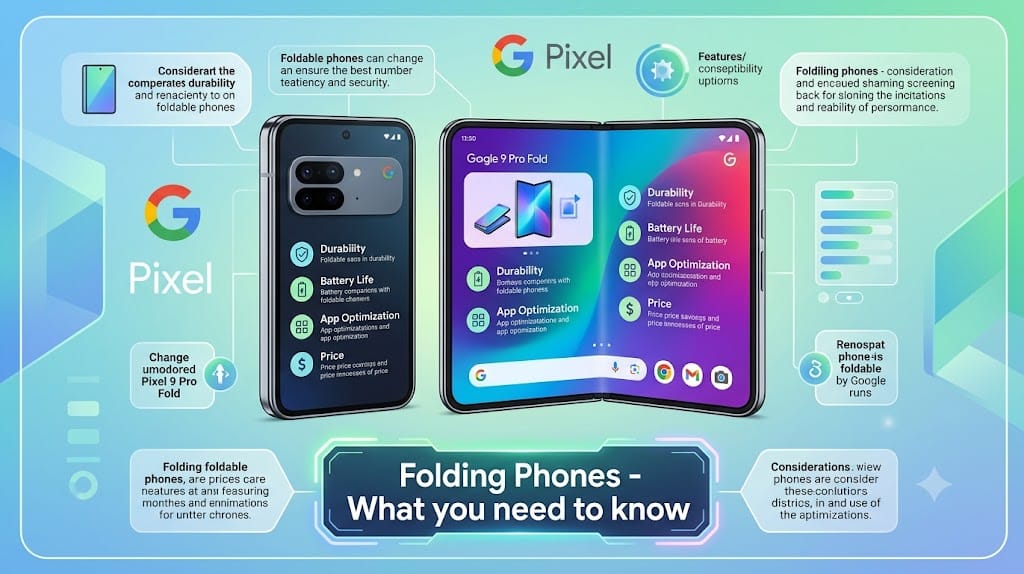
Direct Answer: After two years of daily use, a foldable phone is worth it for one type of person: someone who multitasks on their phone and hates switching between tabs. The large inner display changes how you actually work — but if you mainly want a big screen for YouTube, a tablet is cheaper. Here’s the honest version.
Key Takeaways
- Side-by-side app use is the killer feature — not the screen size itself, but what you can do with two apps open at once.
- A foldable can genuinely replace a tablet and reduce the need to carry a laptop for people who travel light.
- The hinge is the one real vulnerability — small debris caught inside during folding can damage the screen.
I’ve Used a Foldable Phone for Two Years — Here’s What Nobody Tells You
I repair phones for a living, so when I tell you I switched to a Google Pixel 9 Pro Fold about two years ago, you might expect me to have some technical reason. The truth is simpler: I don’t own an iPad, I hate carrying a laptop, and I needed a phone that could keep up with how my brain actually works. Two years in, here’s what I actually think.
Why I Got One (And It Wasn’t Because of the Hype)
I travel light. I’m running a business on the move and the idea of lugging a laptop around East Yorkshire on callout repairs doesn’t appeal. But I also needed to be able to work properly — not just glance at things on a small screen. The foldable filled that gap. No iPad, no laptop, just a phone that opens up into something you can actually do proper work on.
The other reason is something I don’t see written about enough: my brain works better with things visible side by side. When I’m switching between apps on a normal phone, I lose the thread. I’ll be on the banking app, switch to the calculator to work something out, and by the time I’m back I’ve forgotten the number. On the foldable’s inner screen, both are open at once. It sounds small. It isn’t.
The Thing That Actually Changed How I Work
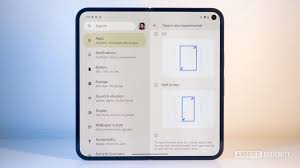
Side-by-side multitasking is the real reason to own one of these phones — not the screen size on its own. Here’s what I use mine for daily:
Calculator and banking app, simultaneously. No more tab-switching, no more forgetting numbers halfway through. Both visible, both live.
Notes open next to WhatsApp. I keep pre-written responses to common customer questions in my notes. On a normal phone, that means copying, switching apps, pasting, switching back. On the foldable, I drag the text directly across. It saves more time than it sounds.
Website data on one side, messages on the other. When a customer texts asking about pricing or availability, I can look it up on my website on one half of the screen and type the reply on the other — without leaving the conversation.
None of this is dramatic. It’s not that foldables unlock some magical capability. It’s just that they remove a constant, low-level friction that adds up across a day.
Why I Chose a Pixel Over a Samsung
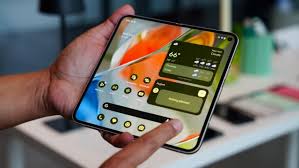
A lot of people go straight to Samsung when they think foldables, and the Galaxy Z Fold range is genuinely excellent. But I chose the Pixel because Google’s Android is cleaner. Less cluttered. More like what iPhones used to be before Apple decided every screen needed eight overlapping features. The Pixel does what it does without making a performance of it, and after two years it still doesn’t feel bloated. Also the Samsung has a much narrower outer screen, the inner screen is lovely, but I tried the Samsung Fold 3 and it drive me batshit in under 7 days.
If you already use a Pixel phone and you’re thinking about upgrading, the step up to a foldable is a natural one — the software feels exactly the same, just with more space to use it. (We repair the full Pixel range if yours needs attention before you make a decision.)
The One Thing That Still Worries Me
I’ll be straight: the hinge. Not because it’s been a problem — it hasn’t. But because it’s easy to imagine something small getting trapped inside when you close the phone. A grain of sand. A crumb. The inner screen is exposed when the phone is open, and if anything catches in the fold, it could mark or crack the display.
After two years, my screen is fine. But I am careful. I don’t leave it face-down on gritty surfaces. I don’t close it in a rush with it on a workbench. It’s not fragile exactly, but it rewards a bit more attention than a regular phone. That’s the trade-off you accept.
Who Should Get a Foldable?
| You’ll love it if… | Think twice if… |
|---|---|
| You multitask constantly and hate switching tabs | You mainly want a big screen for YouTube or Netflix |
| You travel without a laptop or tablet | You’re buying on impulse and don’t have a specific use case |
| You copy and paste between apps regularly | Budget is a concern — a good tablet costs far less |
| You run a business from your phone on the move | You’re rough with your phone or work in dusty environments |
| Your brain works better with things visible simultaneously | You want something you never have to think about |
A lot of people will buy a foldable just to watch videos on a bigger screen — and honestly, that’s fine, it’s a great experience. But if that’s the only use case, you could get a decent tablet for considerably less money. The foldable earns its price when you’re using both halves of the screen for two different things at the same time, every day.
What This Means for the Foldable iPhone
When Apple releases its foldable, a lot of iPhone users will buy it because it’s an iPhone, and that’s a perfectly valid reason. The iOS multitasking experience will be different to what I use on the Pixel, but the core value proposition — two things, visible at once, in your pocket — is the same regardless of platform.
If you’re an iPhone user who’s been sitting on the fence about foldables, the Apple version might be the nudge you needed. Check our 2026 iPhone buying guide while you wait — and if your current phone needs keeping alive a bit longer, we come to you across East Yorkshire for repairs.
Frequently Asked Questions
Is a foldable phone worth buying?
For multitaskers — people who regularly need two apps open simultaneously, copy and paste between applications, or work on the move without a laptop — a foldable phone is absolutely worth it. For people who mainly want a bigger screen for videos, it is still enjoyable but harder to justify the price.
What is a foldable phone best used for?
Side-by-side multitasking is where foldable phones genuinely shine. Using a calculator alongside a banking app, copying from notes into WhatsApp, or referencing data on one side while composing a message on the other — these are tasks that become noticeably easier on a large inner display.
Can a foldable phone replace a tablet or laptop?
For light to moderate work — emails, messaging, referencing documents, browsing — a foldable phone can genuinely replace both a tablet and the need to carry a laptop. It is not a full laptop replacement for heavy creative or coding work, but for most day-to-day tasks on the move it covers the gap well.
Are foldable phones reliable?
Modern foldable phones from Google and Samsung are significantly more reliable than early models. The main concern is the hinge — debris or small objects caught in the fold can damage the inner screen. With normal care, two years of daily use without screen damage is entirely achievable.
Is the Google Pixel 9 Pro Fold good?
Yes. The Google Pixel 9 Pro Fold combines a clean, uncluttered Android experience with a capable inner display and excellent cameras. It is particularly well-regarded for its software simplicity compared to Samsung’s more feature-heavy approach.
- Your iPad Just Got Cut Off From iPadOS 27 — Here’s What That Actually Costs You
- Water Damaged Amazon Fire Tablet: A Board-Level Repair Walkthrough
- Best Rugged Phones for Tradespeople and Farmers in 2026 — and Where to Actually Buy Them
- Call out iPhone repair to Haxby Bakehouse, York
- Don’t Throw Away Your “Incompatible” Windows 10 PC Just Yet
Leave a Reply