
Your iPhone Battery Is the New Step Counter — The Rise of Battery Anxiety Culture | Mend My iPhone
Direct Answer: iPhone battery health has become a cultural metric — tracked daily, debated obsessively, and weighted heavily in buying decisions in a way that’s disproportionate to its actual impact on day-to-day phone use. Generation Z reports charging anxiety kicking in at 44% battery. The 80% charging limit, despite hours of online argument, makes a 1-2% real-world difference over a year. Used iPhones with 95% health sell for £100+ more than identical phones at 85%, even when the lived experience is barely different. This post is about what’s actually happening, why, and how to opt out without missing anything that matters.
Key Takeaways
- Battery anxiety is a recognised cultural phenomenon. Generation Z panics at 44% battery, Boomers wait until 34% — a ten-point generational gap that says more about smartphone relationships than battery technology.
- The 80% charging limit debate that’s consumed thousands of Reddit threads turns out to make a 1-2% real-world difference in battery health over a year. The argument is bigger than the technical effect.
- Battery health has become a price signal in the secondhand iPhone market in a way that doesn’t reflect actual usability — phones at 85% work perfectly well but command much lower prices than phones at 95%.
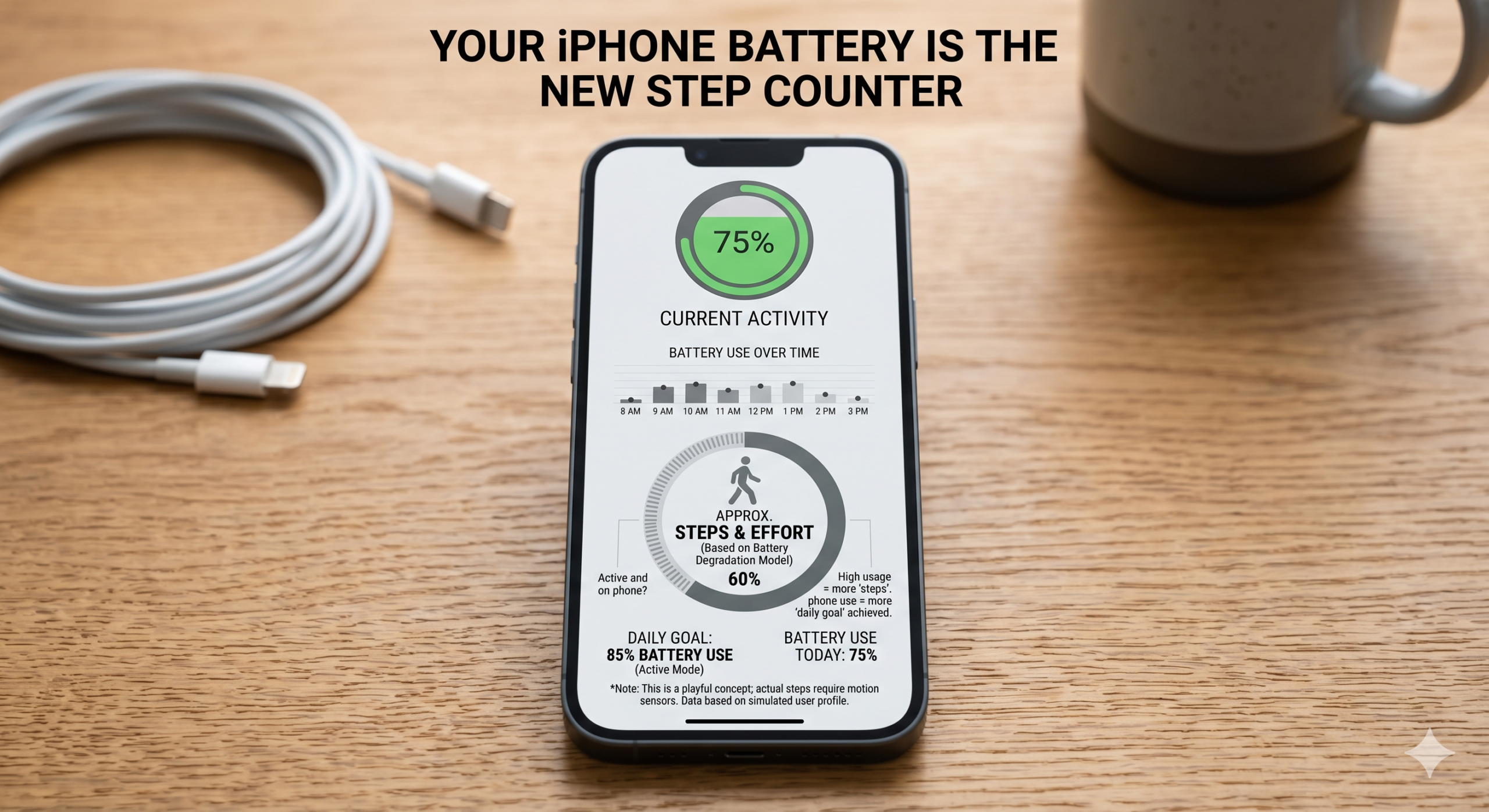
Your iPhone Battery Is the New Step Counter
There’s a quiet cultural shift happening that nobody’s quite written about. iPhone users — millions of them — have started monitoring their battery health the way they monitor their step count. Daily checks. Screenshot-and-compare. Subreddit communities trading data. Heated arguments in the comments of any post that mentions overnight charging. The 80% charge limit debate alone has generated more online discourse than several presidential elections.
From the repair-bench perspective, it’s a fascinating phenomenon — equal parts entertaining and a little bit sad — because the actual technical truth underneath all the anxiety is much smaller than the anxiety itself. Most of the people stressed about their battery health have batteries that are completely fine. Most of the optimisations they’re arguing over make tiny differences. And the secondhand market has invented a price premium for a metric that often doesn’t predict real-world performance.
This post is about what’s actually going on, why, and what — if anything — you should do about it.
The data says battery anxiety is real
A study cited across multiple tech publications in 2024-2025 measured at what battery percentage users start to actively look for a charger. The generational split is striking:
| Generation | Panic threshold (% charge remaining) |
|---|---|
| Generation Z | 44% |
| Millennials | 43% |
| Generation X | 38% |
| Baby Boomers | 34% |
That’s a ten-point gap between the youngest and oldest generations. Gen Z reaches for a charger nearly half-charged. Boomers wait until they’re properly low. The technology is the same. The phones are the same. The relationship to the battery percentage is different.
The same research found that 61% of Americans prefer seeing exact numerical battery percentage on screen at all times rather than the visual battery bar. The numerical display turns the battery into a tracked quantity rather than a vague status. Once it’s a number, it can be compared, monitored, optimised — and worried about.
The rise of the iPhone battery community
If you’ve spent time on r/iphone, r/applehelp, r/jailbreak, or any of the device-specific subs, you’ll have noticed a pattern. Posts in the format:
- “My iPhone 15 Pro at 11 months — battery health 96%. Thoughts?”
- “Lost 3% health overnight. Should I be worried?”
- “Charging cycles: 247 after 9 months. Above or below average?”
- “Switched to 80% limit on day one — 12-month update”
These posts get hundreds of comments. They generate detailed back-and-forth on charging methodology, environmental factors, app behaviour, the influence of third-party cables. They rate other people’s batteries. They speculate about whether Apple’s reporting is accurate. They argue, intensely, about whether sleeping with the phone on charge is better or worse than topping up during the day.
The participation in these threads isn’t passive. It’s active community-building around a single metric, with its own vocabulary, etiquette, and recurring debates. It’s not unlike the early days of fitness-tracker culture — Fitbit users comparing daily step counts in 2014, Strava cyclists arguing over segment legitimacy in 2016. The battery has become the metric the iPhone-owning community organises around.
The 80% charging limit — biggest argument, smallest effect
The most-debated single topic in this space is whether to enable Apple’s 80% charging limit, introduced with iPhone 15 and expanded across the lineup since. The argument goes:
- For: Lithium-ion batteries degrade fastest at high state of charge. Limiting charge to 80% reduces time at high charge, which should slow degradation.
- Against: You’re starting every day with 20% less usable battery, so you charge more frequently. The cycle count goes up faster, partially cancelling the longevity gain.
This argument has consumed enormous amounts of online discussion. The MacRumors forums alone host thousands of comments on the question. Reddit megathreads run for months. Tech blogs commission long-term tests.
And then someone actually ran the numbers. Juli Clover at MacRumors tested an iPhone 16 Pro Max charged with the 80% limit for a full year against an iPhone 15 Pro Max charged conventionally. The result:
- iPhone 16 Pro Max (80% limit): 94% maximum capacity after 12 months / 299 cycles
- iPhone 15 Pro Max (no limit): 94% maximum capacity at 12 months
The same number. The 80% limit produced no detectable advantage in this real-world year-long test. Other studies have found a marginal benefit — typically 1-2 percentage points of additional health retained over 12 months. Real but smaller than the volume of debate suggests.
The honest read: the 80% charging limit might help. It might not. Either way, the difference is probably between “your battery is at 91% after a year” and “your battery is at 93% after a year” — a real but tiny gap. Not the difference between a degraded battery and a healthy one. Not worth the daily mental overhead it generates for some users.
How battery health changed the secondhand iPhone market
The cultural shift has economic consequences. Used iPhone listings now routinely include battery health screenshots. Buyers refuse phones below certain thresholds. The market has effectively created a price ladder based on a single number:
| Battery Health | Market perception | Approximate price impact |
|---|---|---|
| 100% | “As new” — premium | Top of market |
| 95-99% | “Excellent” — most desirable | Near-top pricing |
| 90-94% | “Good” — acceptable to most buyers | Mid-market pricing |
| 85-89% | “Fair” — concerns flagged | Discounted £50-100 |
| 80-84% | “Replace soon” — niche buyers only | Significantly discounted |
| Below 80% | “Needs new battery” | Heavy discount, often only sold for parts/repair |
The interesting part: the lived difference between an iPhone at 95% and one at 85% is small. Both will get through a normal day. Neither will shut down at high percentages. Neither will struggle with normal apps. Yet the price difference can be £100+ on the same model phone.
This isn’t because the buyers are wrong — battery health does eventually matter, and a phone at 85% is closer to needing replacement than one at 95%. But the price gap reflects perceived rather than actual usability difference. The metric has become the thing being traded, partly independent of what the metric measures.
Why the obsession exists — and what it’s really about
Battery health monitoring sits at the intersection of several modern phenomena:
- Quantified-self culture. We track steps, sleep, heart rate, screen time, and now battery health. Anything that produces a number gets monitored. Anything monitored generates anxiety about whether the number is good enough.
- Nomophobia. The fear of being without a functioning phone. Battery health is a proxy for “will my phone abandon me?” In that sense, the anxiety isn’t really about the battery — it’s about phone dependency.
- Sunk-cost psychology. An iPhone is an expensive purchase. People want it to last. Watching the battery health number tick down feels like watching the value of the purchase erode in real-time.
- Visible decline. Most things in life degrade invisibly. Battery health degrades on a number you can check whenever you want. Visible decline is harder to ignore than invisible decline.
- Forum-driven amplification. Once a community forms around a metric, the anxiety self-reinforces. Every post about battery problems adds to the perception that battery problems are everywhere. The reality might be that most batteries are fine; the perception is that batteries are constantly under threat.
The healthy version — what to actually do
The honest, repair-specialist take on managing iPhone battery health, free of community-amplified anxiety:
- Charge whenever convenient. Modern iPhones manage their own charging well. Plug in when it suits your day, unplug when it doesn’t. The phone will outlive your patience for it long before it outlives reasonable charging habits.
- Enable Optimised Battery Charging. It’s the one setting that genuinely helps without trade-offs. Settings → Battery → Battery Health & Charging. Set and forget.
- Don’t bother with the 80% limit unless you genuinely have light usage. The benefit is too small for most users to justify starting every day with less battery.
- Stop checking battery health daily. Once a month is plenty. Tracking a slow-changing number daily is a recipe for anxiety without information gain.
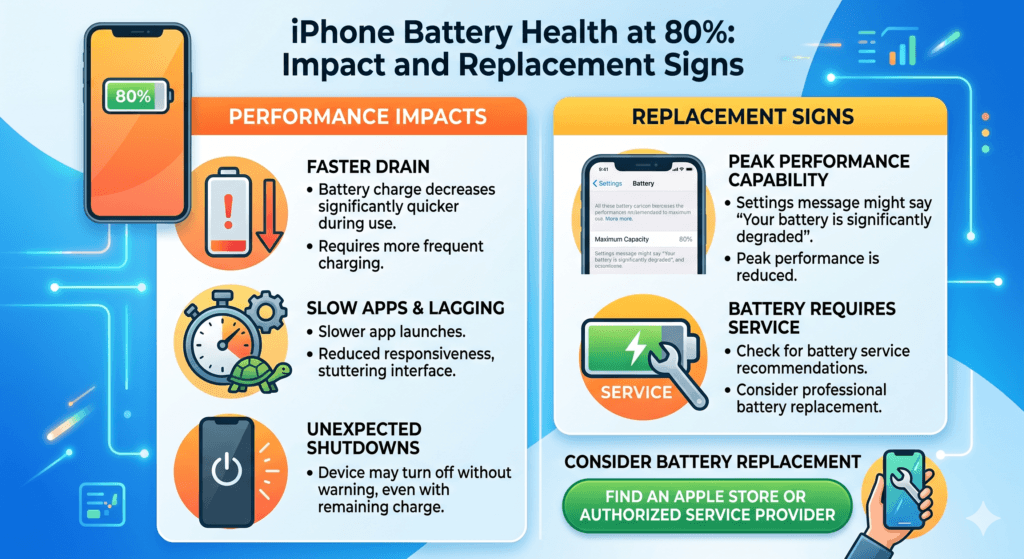
- Replace the battery when it actually starts affecting your day. Not when it crosses an arbitrary threshold. Phones at 78% that get through your day fine don’t need replacing. Phones at 88% that shut down unexpectedly do. The percentage is a guide, not a rule.
- Use the phone you’ve got. Most iPhones are perfectly serviceable for years past when the community would suggest “needing” upgrade or replacement. A £35 battery in a four-year-old iPhone is dramatically more cost-effective than buying a new phone.
The battery isn’t the relationship
The strangest part of all this is that battery health is now treated as a measure of the iPhone-owner relationship. “How’s your phone?” used to mean “is it working?” Now it sometimes means “what’s the battery health?” The conversation has shifted from functional to numerical.
This isn’t a bad thing exactly — informed users making informed decisions is generally good. But it’s worth noticing. The phone in your pocket is doing the same things it did three years ago. The battery has degraded by some percentage that, in real terms, you’d never notice if you weren’t checking. The anxiety about it is largely manufactured by the visibility of the metric and the community organised around discussing it.
If checking battery health stresses you out, you can stop checking. If a battery replacement would genuinely change your day, get one. The two things aren’t the same.
Related reading
- Wired vs Wireless vs MagSafe — which is best for battery health — the charging-method debate, evidence-based
- Why Reddit Thinks iOS 26 Is Destroying iPhone Batteries — the iOS-side battery story
- Are AI Features Quietly Making iPhones Worse?Are AI Features Quietly Making iPhones Worse? — the broader feature-creep argument
Frequently Asked Questions
Why are people obsessed with iPhone battery health?
Three things converged: Apple made battery health visible in Settings (Battery Health & Charging), Apple introduced battery management features that gave users levers to pull (Optimised Battery Charging, 80% charge limit), and the secondhand iPhone market made battery health a central pricing factor. The result is that what was once an invisible metric is now a daily-tracked number that some users monitor as obsessively as step counts or sleep scores.
Does limiting iPhone charging to 80% really help battery health?
Yes, but the difference is much smaller than the online debate suggests. Real-world testing comparing identical iPhones charged to 80% vs 100% over a full year showed the 80%-limited iPhone retained roughly 1-2% more battery health than its 100%-charged counterpart. Useful but modest. The trade-off is that you start every day with 20% less usable charge, which means heavier users charge more frequently — partially offsetting the longevity gain.
At what battery percentage do most people start panicking?
The data shows a clear generational pattern. Generation Z reports the earliest charging anxiety at 44% battery. Millennials follow at 43%. Generation X holds out until 38%. Baby Boomers are the most composed, waiting until 34% before actively seeking a charger. The average panic threshold across all groups is around 38%.
Is my iPhone battery actually bad if it’s at 90% health?
No. Apple considers a battery to be performing normally until Maximum Capacity drops below 80%. A battery at 90% is still in good condition and performing close to its original specification. Battery health declines naturally with use — losing 5-10% per year of normal daily use is expected. Worrying about a 90% reading is anxiety, not engineering.
When should I actually replace my iPhone battery?
The honest answer: when battery life is genuinely affecting your day, regardless of what the percentage says. Many people replace batteries at 80% out of habit when the phone is still serving them perfectly well. Others wait until 60% because they don’t notice. The right time is when you’re charging more often than is convenient, the phone is shutting down unexpectedly at higher percentages, or daily use feels constrained. The percentage is a guide, not a rule.
Why has battery health become so important when buying a used iPhone?
Because it’s measurable, comparable, and visible. Used iPhone listings now routinely include battery health screenshots — buyers won’t seriously consider phones with health below 85%, and ones at 95%+ command premium prices. This has real consequences: a phone with 95% battery health can sell for £100+ more than the same phone at 85%, even if the difference in actual day-to-day battery life is small.
Is iPhone battery anxiety a real psychological phenomenon?
It’s recognised as part of nomophobia (the fear of being without a working mobile phone) and overlaps with broader smartphone-related anxiety patterns. The specific battery-health monitoring behaviour — daily checking, comparing to baselines, taking screenshots — has elements of self-monitoring behaviours seen in fitness tracking and health apps. For most people it’s a mild inconvenience. For some it’s a genuine source of stress disproportionate to the underlying technical issue.
Sources
Battery anxiety statistics from research published in StudyFinds and related smartphone-anxiety surveys. The 80% charging limit testing data from Juli Clover’s long-term comparison published on MacRumors (2024). Used iPhone market pricing patterns drawn from current secondhand listings on Swappa, Music Magpie, CEX, and eBay UK. Generational charging-anxiety thresholds from cross-generational smartphone behaviour research.
Need a battery replacement (or just a sanity check)?
If your iPhone battery has dropped below 80% Maximum Capacity, replacement is genuinely worthwhile — Mend My iPhone fits replacement batteries from £35 in 15-45 minutes at the shop in Market Weighton or on callout to your home or workplace across East Yorkshire. If you’re not sure whether your battery is actually a problem or whether you’ve just been spending too much time on r/iphone, drop in for a free diagnostic. We’ll tell you honestly whether it needs doing — or whether your phone’s actually fine and it’s just the anxiety that needs addressing.
Leave a Reply