
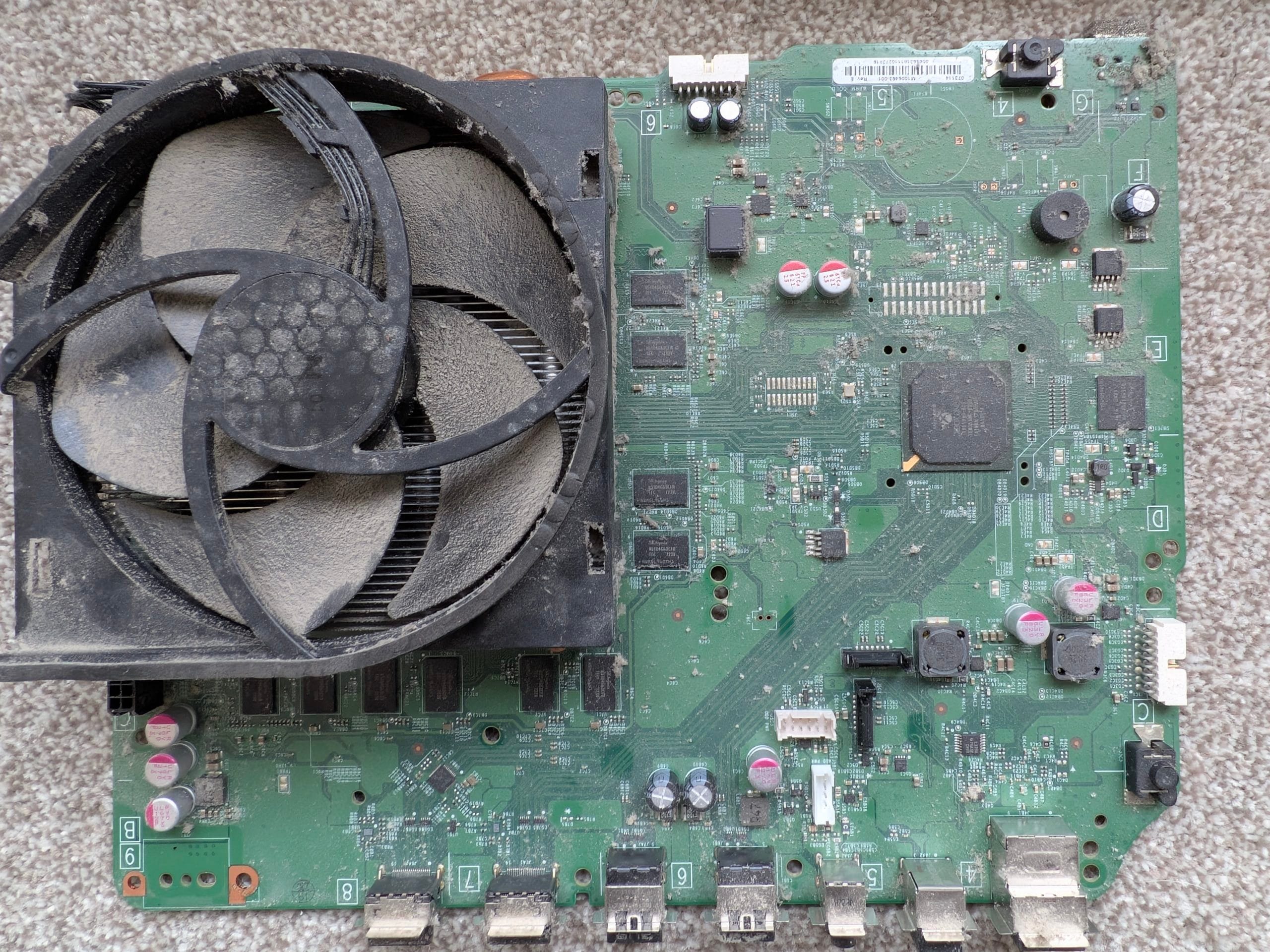
Board-Level Console Repair Market Weighton | Dead Xbox Brought Back to Life | 12-Month Warranty — Mend My iPhone
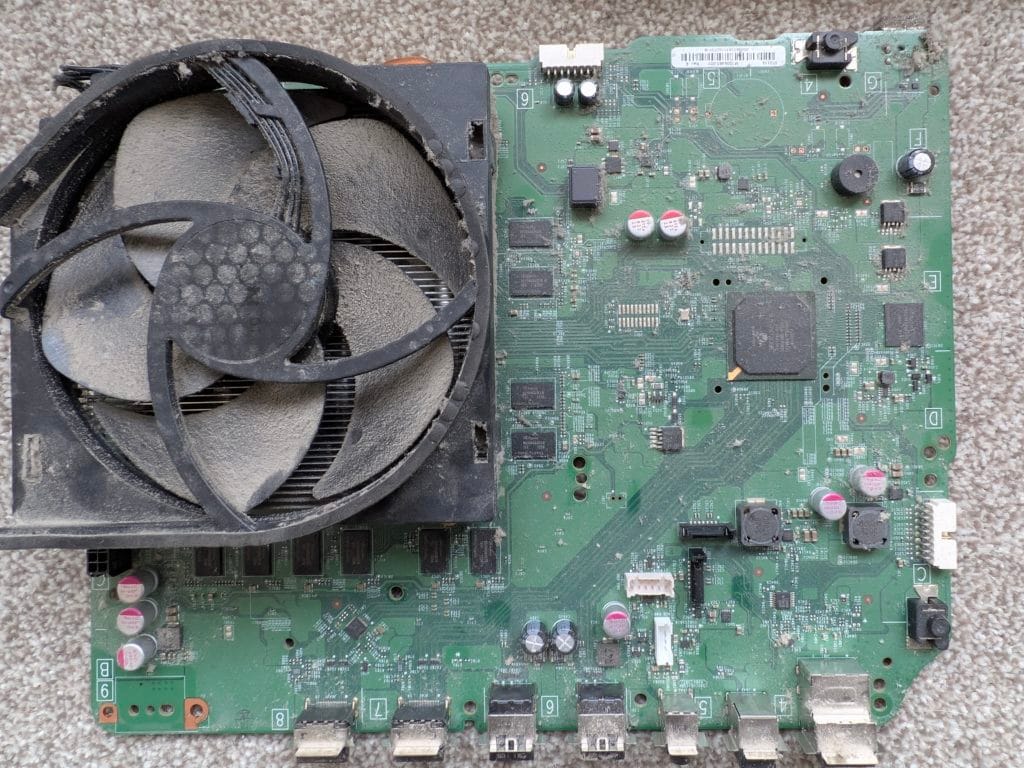
Direct Answer: A games console that is completely dead — no lights, no fan, no picture — has usually suffered a power rail shorting to ground, not a dead main chip. At Mend My iPhone in Market Weighton I trace these faults at board level and bring “dead” consoles back to life, often by replacing one component worth pennies.
Key Takeaways
- A console with no signs of life is almost never a write-off — it is nearly always a power fault that can be traced to a single failed part.
- Board-level repair finds and replaces the one component causing the problem instead of binning the whole machine, which is cheaper and keeps it out of landfill.
- The same fault-finding method works on Xbox, PlayStation, handhelds, laptops and PCs — if it has a circuit board and a power problem, it is worth a look.
How I Brought a Dead Xbox One S Back to Life — A Board-Level Repair Story
This one came to me stone dead. Not “won’t update,” not “no picture” — properly, completely dead. Plug it in, press the button, and nothing happens at all. No light, no fan, no sound, no flicker on the telly. The kind of dead that makes most people assume it is firewood and start pricing up a replacement.
It wasn’t firewood. A couple of hours later it was booting up on my bench. Here is exactly how that happened, told plainly enough that you don’t need to be a technician to follow it — but with enough of the real method in that, if you are a technician, you will know I am not making it up.
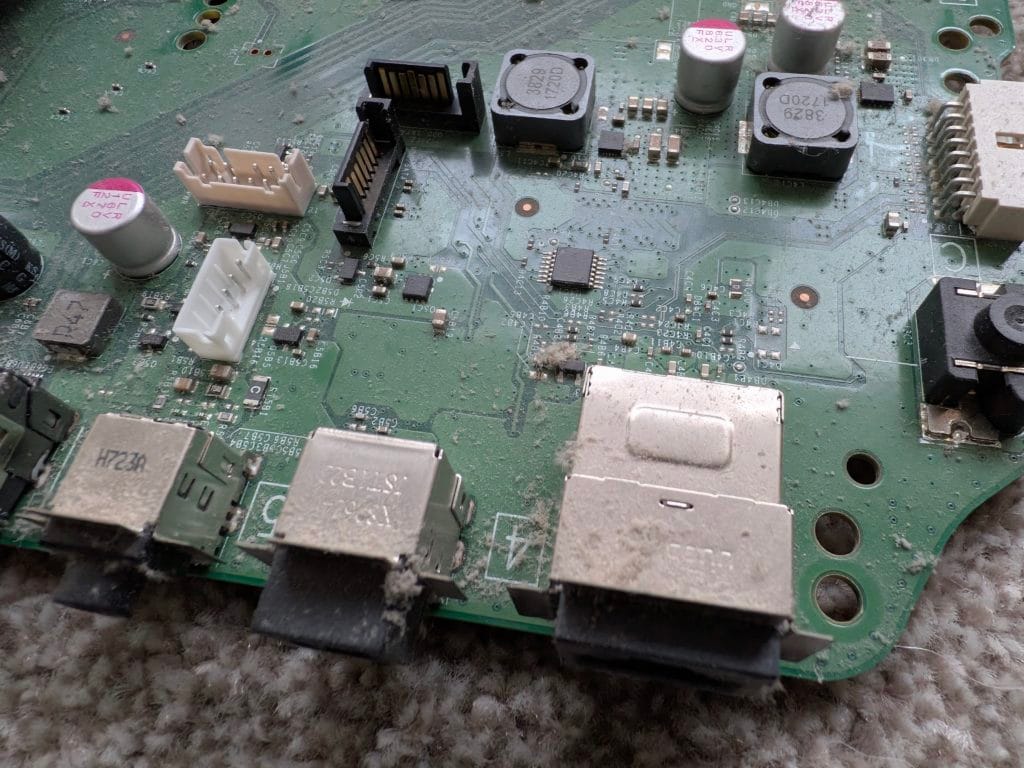
First job: is it the console, or just the brick?
Before touching the board, you rule out the easy stuff. A lot of “dead” consoles are actually a dead power supply — the brick, not the machine. So the very first check is whether power is even arriving. In this case the supply was fine and the console itself was the problem. That tells you the fault is somewhere on the motherboard, and the hunt begins.
I have been taking things apart to understand them since the ZX Spectrum days, long before anyone called it a “Genius Bar.” You can read a bit more about that on my background in diagnostics and fault finding if you like. The point is that a dead board doesn’t scare me — it is just a puzzle that hasn’t been solved yet.
The first rule of a dead board: it is usually a short, not a corpse
Here is the thing most people get wrong. When a console is totally dead, the instinct is “the main chip has failed.” That is almost never what has happened. The expensive processor is usually sitting there perfectly healthy, waiting for power that never arrives.
A console runs on a stack of different voltages — power “rails,” each one feeding a different part of the machine. One of them is the standby rail: the first rail to wake up when you plug the console in, and the one that tells everything else it is allowed to switch on. If that standby rail is faulty, nothing downstream ever gets the green light. The whole console stays dark. No light, no fan, no nothing — which is exactly the symptom I was looking at.
And the most common way a rail goes faulty is a short to ground: a path where the power is being dumped straight to earth instead of doing its job. Picture a hosepipe with a split right at the tap — open the tap and the water gushes out of the split instead of reaching the garden. A shorted rail does the same with electricity. The power-management chip sees the rail being yanked to zero, decides something is dangerously wrong, and refuses to start. Sensible behaviour, but it leaves you with a dead machine.
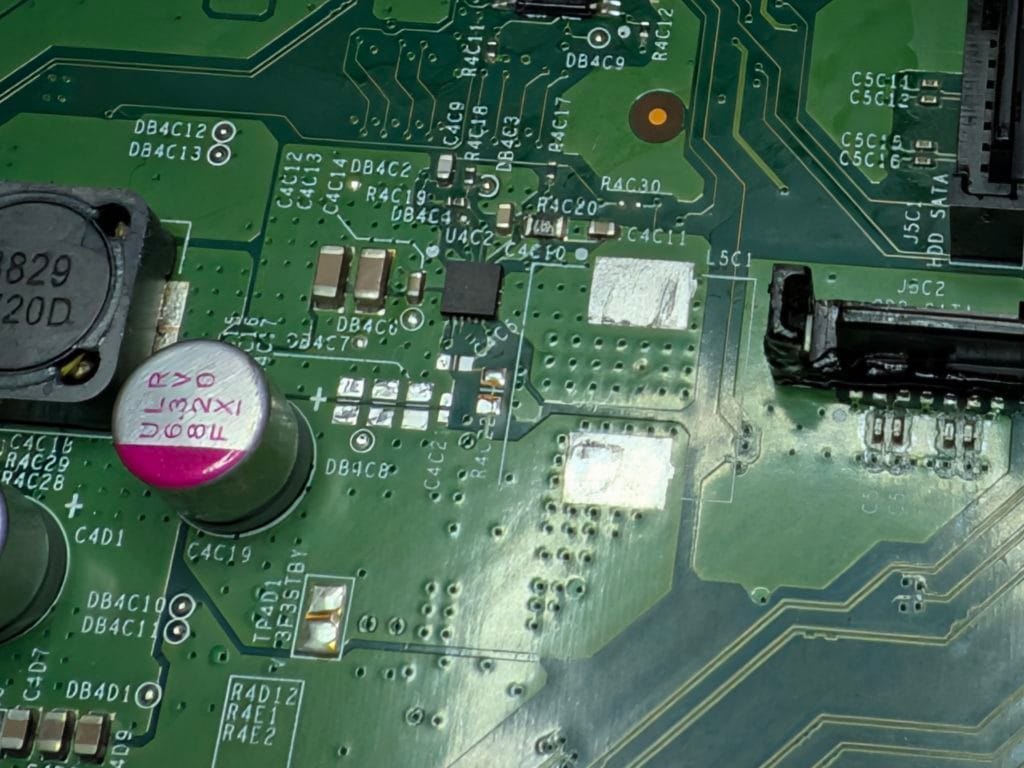
Finding the dead rail
So the job becomes: which rail is shorted? You measure each one against ground in turn, looking for the one that reads a dead short — effectively zero resistance to earth, where a healthy rail would read far higher. Working through them, the standby rail was the culprit. Dead short to ground. That single reading explains the entire fault: standby rail down means the console can never sequence, which means completely dead.
To do this properly you work from the board’s schematic — the circuit diagram for that exact model. It tells you where each rail lives, which chip generates it, and where the safe places are to put your probes. One handy test point is the little coil (an inductor) that sits at the output of the rail’s regulator. Measure there and you are measuring the rail itself. This is the part where guesswork ends and the diagram earns its keep.
Narrowing a whole rail down to one tiny part
Knowing the rail is shorted is not the end — it is the start of the real detective work. A power rail runs all over the board and has lots of little components hanging off it, any one of which could be the villain. On this rail there were three near-identical capacitors sitting side by side, and when I measured them, all three read shorted.
That sounds like three dead parts. It isn’t. They all share the same rail, so when one of them shorts, they all report the short — like three taps on the same burst pipe all running dry. Only one was actually faulty; the other two were innocent bystanders wired to the same line.
The trick to telling them apart is to split the circuit in two. I lifted one end of that little coil to break the rail into a “regulator side” and a “components side,” then measured each half separately. That tells you instantly whether the short is the chip generating the power or something on the rail it feeds. The short stayed on the components side — so the regulator was fine, and the fault was one of those capacitors.
The culprit turned out to be a cracked multilayer ceramic capacitor — a part smaller than a grain of rice. These are everywhere inside modern electronics, and when one cracks internally it can short straight through and drag its entire rail to ground. One failed component, smaller than a pinhead, killing a whole console. That is board-level repair in a nutshell: the fault is tiny, the symptom is total.
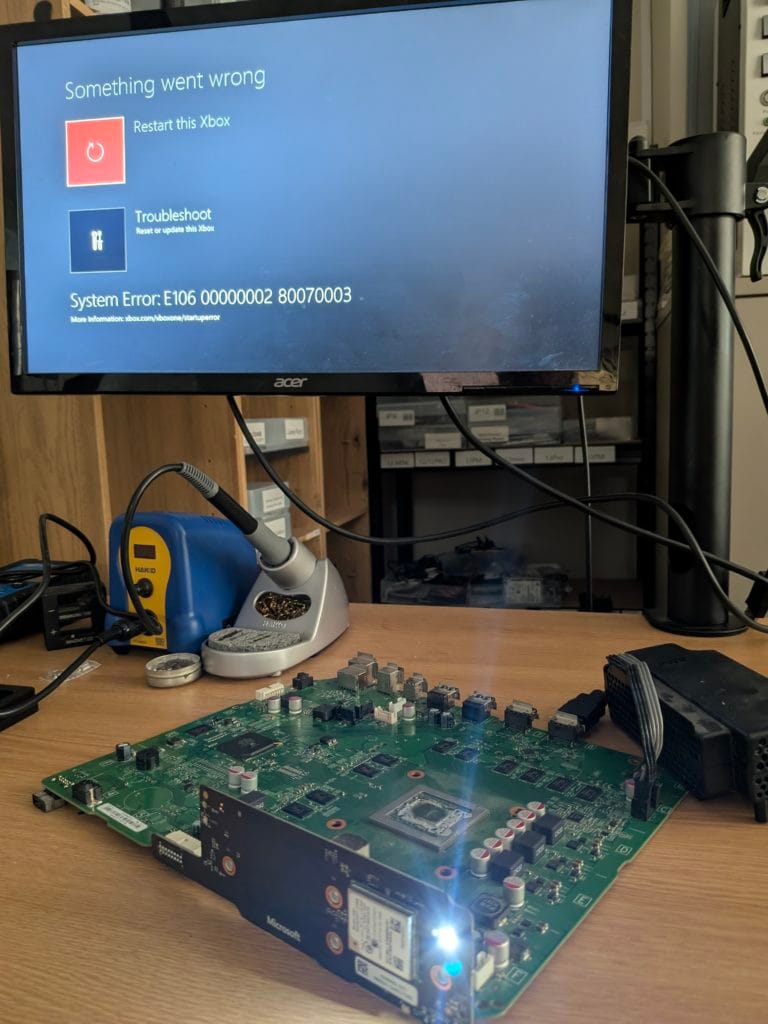
The fix, and the moment of truth
Once you have found the bad part, the repair itself is the quick bit. Off comes the cracked capacitor, the rail gets re-checked to confirm the short has gone, a fresh component goes on in its place, and the board goes back together.
Then the moment every repair lives for: power on. The fan spun, the light came up, and the console that had shown no signs of life put a picture on the screen. It threw a software message asking to reinstall its system — which, after a board has been dead, is a very welcome sight, because it means the hardware is alive and only the software needs reloading. A USB reinstall later and it was fully up and running. Back from the dead.
What a “dead” console is really telling you
If you take one thing from this, take this: “dead” almost never means “finished.” Here is a quick guide to what the common symptoms usually point to, and whether they are the sort of thing I can fix at board level.
| Symptom | What it usually means | Board-level fixable? |
|---|---|---|
| No lights, no fan, no picture | A power rail shorted to ground, often one cracked capacitor | Yes, usually |
| Powers on, then shuts straight off | A short on a main rail or a protection circuit tripping | Often |
| Fan spins but no picture | Processor, HDMI or a video-related rail fault | Sometimes |
| Disc won’t read or load | Drive mechanism, laser or drive control board | Yes, at drive level |
| Liquid or drink spilled inside | Corrosion bridging rails across the board | Often, with proper cleaning |
Why I bother with this kind of work
Board-level repair is slow, fiddly and not very profitable per hour compared to swapping a phone screen. Most shops won’t touch it, which is exactly why I will. We live in a world that wants you to bin a £250 machine over a part worth pennies, and I have never had much time for that.
If something of yours has gone dark and everyone has told you it is dead, that is often the point where it gets interesting for me. Twelve years in, a 4.9-star rating, a proper warranty and a Border Collie called Jen supervising from the corner. We fix what others can’t.
Frequently Asked Questions
My games console is completely dead with no lights. Is it worth repairing?
Almost always, yes. A console with no signs of life rarely has a dead main chip. Far more often a single power rail has shorted to ground, usually because of one tiny failed capacitor. That is a board-level repair, not a write-off, and it is normally a fraction of the cost of a replacement console.
What does board-level repair actually mean?
It means repairing the motherboard itself, down to individual components like capacitors, resistors and power-management chips, rather than swapping the whole board out. It needs schematics, a microscope, fine soldering and the patience to trace a fault back to one part. Most shops do not offer it. I do.
Can you fix a console that has no power at all?
Yes, that is one of the most common board-level faults I see. No power usually means a power rail is shorted to ground, which stops the whole console from waking up. I measure the rails, find the dead one, isolate the failed component and replace it. A genuinely dead chip is the rare exception, not the rule.
Do you repair PlayStation and other consoles, or just Xbox?
The Xbox in this story is just the example. The same method applies to PlayStation, Nintendo, handhelds, laptops and PCs. A shorted power rail behaves the same way whatever the badge on the case. If it has a circuit board and a power problem, it is worth bringing to me.
How long does a board-level console repair take?
Fault-finding is the slow part, not the soldering. Tracing a short can take an hour or it can take an afternoon, depending on how the board behaves. Once the faulty component is found, the actual repair is quick. I will always tell you what I have found before committing you to anything.
Is repairing a dead console cheaper than buying a new one?
In most no-power cases, comfortably so. The failed part is often a component worth pennies. You are paying for the skill and the kit to find it, not for a new console. It also keeps a working machine out of landfill, which matters more than the throwaway culture wants you to think.
Can I send my console in by post for a board-level repair?
Yes. I run a UK-wide mail-in service alongside walk-ins at the Market Weighton shop, and every repair carries a 12-month warranty. Email james@mendmyiphone.co.uk or message 0330 999 2949 and I will tell you how to get it to me safely.
Got a dead console? Don’t bin it — let me look at it
If your Xbox, PlayStation, laptop or PC has gone completely dead, there is a good chance it is one small failed part away from working again. I do board repairs on consoles and Nintendo Switches currently – Blue Screen of Death to Charge Ports from the shop at 9 Southgate, Market Weighton, with walk-ins welcome and a UK-wide mail-in service for anyone further afield.
PS5, Xbox & Switch Specialists, East Yorkshire
Dead console? Won’t turn on, no picture, not charging? Saved Game repairs PS5, Xbox and Nintendo Switch to component level — including the faults other repair shops turn away. Post it in from anywhere in the UK.
You can also currently take them in to Mend My iPhone, 9 Southgate, Market Weighton which is a Drop Off point.
Leave a Reply