
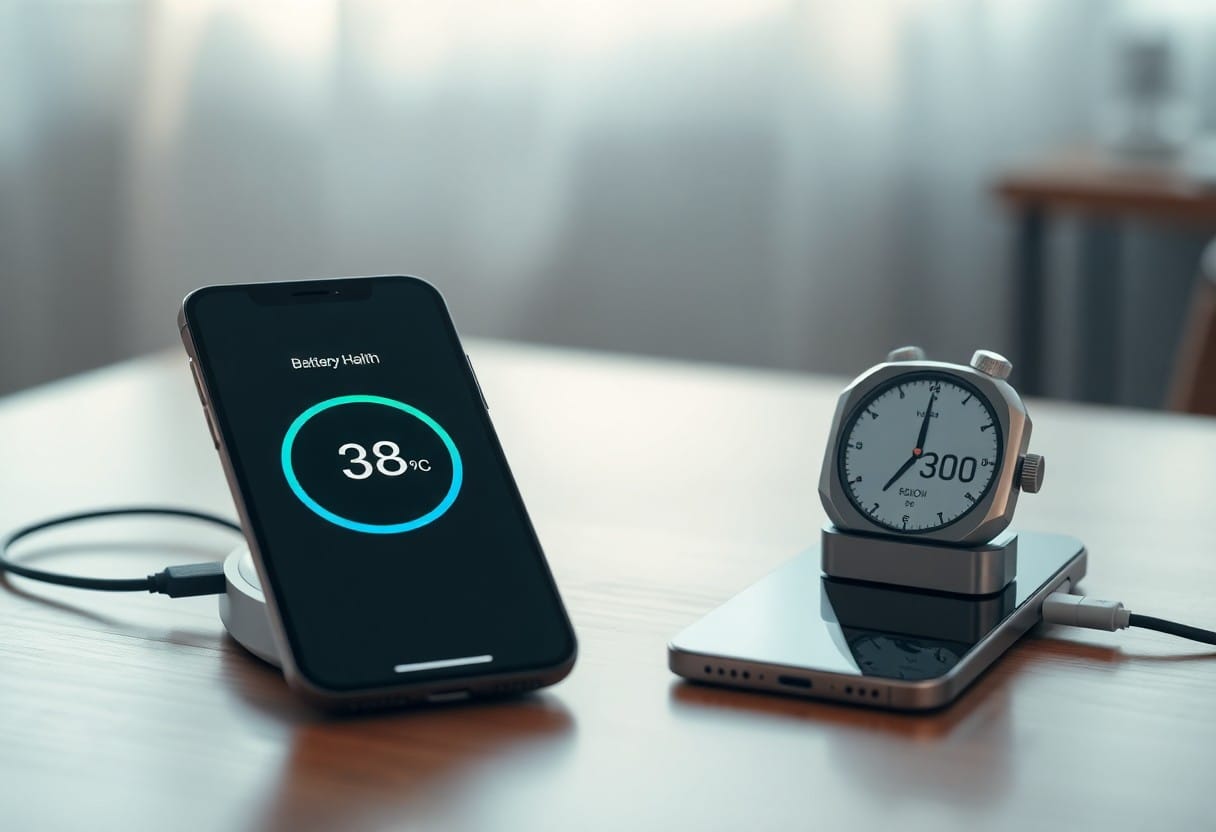
Just how you charge your iPhone impacts its long-term battery health. Fast charging generates more heat, accelerating battery wear over time. Standard charging is gentler, preserving capacity. While fast charging offers convenience, relying on it daily can shorten your battery’s lifespan. You control the balance between speed and longevity.
Key Takeaways:
- Fast charging generates more heat than standard charging, and sustained high temperatures can accelerate lithium-ion battery degradation over time.
- Modern iPhones include built-in safeguards that slow the charging rate when the battery reaches 80% to reduce stress, whether using fast or standard charging.
- Using fast charging occasionally-like when you need a quick top-up-has minimal long-term impact on battery health under normal conditions.
- Standard charging produces less heat and places less strain on the battery, making it a gentler option for overnight or extended charging sessions.
- Apple’s optimized battery charging feature learns your daily routine and delays charging past 80% until you need to use the phone, helping prolong battery lifespan regardless of charging speed.
- Charging habits matter more than speed alone-frequently letting the battery drop to 0% or keeping it at 100% for hours harms battery health more than using fast charging.
- Using certified chargers and cables ensures safe power delivery and helps maintain battery integrity, whether charging fast or slow.
The Heat and the Battery
Heat silently undermines your iPhone’s battery health over time. Fast charging generates more thermal energy than standard charging, and prolonged exposure to high temperatures accelerates wear. You may not notice it immediately, but each heated cycle takes a small toll on longevity.
Thermal Friction
Charging creates internal resistance within the battery, producing heat as a byproduct. Fast charging increases this effect, raising the device’s core temperature. Excessive heat stresses internal components, reducing efficiency and increasing the risk of long-term damage with repeated use.
Cell Degradation
Every lithium-ion cell in your iPhone degrades with each charge cycle, but heat speeds up the process. Fast charging raises cell temperature, promoting chemical side reactions that permanently reduce capacity over time. You’re trading speed today for shorter battery lifespan tomorrow.
Lithium-ion batteries rely on the smooth movement of ions between electrodes, but elevated temperatures disrupt this balance. When you fast charge regularly, the electrolyte breaks down faster and solid deposits form on the anode, a process known as SEI growth. This layer thickens with heat exposure, trapping ions and reducing usable capacity. Over months, this translates to noticeably shorter battery life, even if your usage stays the same. Your iPhone may still hold a charge, but it won’t last as long between plugs-especially in older models.
The Way of the Current
You’ve likely seen Fast Charging Is Everywhere Now, But Is it Dangerous?, but few understand how it truly affects your iPhone’s battery. High currents generate heat, and excessive heat is the real enemy of long-term battery health. Your charging habits shape how quickly your battery degrades over time.
High Voltage Force
Fast charging pushes higher voltage into your iPhone quickly, delivering convenience at a cost. This surge creates more heat, accelerating chemical wear inside the battery. While safe in the short term, frequent use can reduce overall lifespan, especially if done on a hot surface or with poor ventilation.
Gentle Flow
Standard charging uses lower current, producing less heat and placing minimal stress on the battery. This slower method supports longer battery longevity by avoiding thermal spikes. Over weeks and months, choosing gentle flow often means more full cycles before capacity drops below 80%.
Choosing gentle flow doesn’t just reduce heat-it promotes stable ion movement within the battery, which slows degradation. Apple’s Optimized Battery Charging builds on this principle by delaying final charges until you need them. You’re not just preserving capacity; you’re protecting the internal chemistry that keeps your iPhone running strong for years.
The Logic of the Chip
Your iPhone’s charging behavior isn’t random-it’s directed by an intelligent power management chip that regulates voltage and current. This chip communicates with the battery in real time, adjusting the charge rate to prevent overheating and reduce stress. Its main goal is longevity, not speed, ensuring each cycle contributes as little wear as possible.
Software Constraints
Apple limits fast charging through software to protect your battery over time. Even with a capable charger, your iPhone may slow down the rate after reaching 80%. This delay reduces heat buildup, the biggest threat to battery lifespan, especially during peak charging phases.
Nighttime Buffers
When you charge overnight, your iPhone doesn’t stay at 100% for hours. Instead, it stops at 80% and waits, then resumes charging closer to your wake time. This buffer drastically cuts prolonged high-voltage exposure, which degrades lithium-ion cells faster.
Leaving your phone plugged in all night seems risky, but the system is designed to respond to your habits. By learning your routine, it holds the charge at 80% and finishes only when needed. You get full power without the damage of extended peak charging, making overnight use far safer than it appears.
The Rules of the Grid
You follow invisible patterns every time you plug in your iPhone. How and when you charge matters more than you think. Heat and high voltage from fast charging can accelerate wear, especially when done repeatedly. Your battery thrives on predictability, not speed.
Charging Windows
Timing your charge can protect your battery’s long-term health. Keeping your iPhone between 20% and 80% reduces stress. Overnight fast charging pushes the battery to 100% early, leaving it topped off for hours-this strains longevity.
Depth of Discharge
Draining your iPhone to 0% before charging forces it to work harder. Shallow discharges are gentler. Staying above 20% most of the time slows degradation and extends overall battery lifespan.
Every discharge cycle impacts your battery at a chemical level. Lithium-ion cells degrade faster when exposed to extreme lows. You don’t need to charge after every small drop, but letting the level plummet regularly triggers deeper chemical stress. Repeated deep discharges generate internal resistance, reducing capacity over time. Charging from 40% to 80% is far kinder than running from 5% to 100% daily.
The Value of the Hour
Every minute you charge your iPhone carries weight in long-term battery health. Choosing between fast and standard charging isn’t just about speed-it’s about how heat and voltage stress affect longevity. According to discussions on iPhone fast charging: good or bad for battery health?, frequent high-speed charging can accelerate wear. Your daily habit shapes your battery’s lifespan more than you think.
Time Utility
You gain precious minutes with fast charging during busy mornings or low-battery emergencies. That speed comes at a cost-higher heat output and increased voltage strain the battery. While convenient, relying on it daily may reduce overall battery capacity faster than you expect. Short-term gains can lead to long-term trade-offs.
Maintenance Costs
You might save time now, but frequent fast charging can lead to earlier battery degradation. Replacing a worn battery means added expense and downtime. Apple’s battery service costs range from $69 to $99, depending on model. What feels efficient today could cost you down the line.
Over time, degraded battery performance forces more frequent charging cycles, worsening the decline. You may find yourself needing a battery replacement sooner than the typical 2-3 year mark. This isn’t just an inconvenience-it impacts resale value and daily reliability. Avoiding daily fast charging helps preserve capacity and delay costly service, keeping your iPhone running efficiently longer.
The Choice of the Cable
Your charging cable directly impacts how your iPhone battery ages over time. Using Apple-certified cables ensures stable power delivery and reduces the risk of voltage spikes. While third-party options may seem convenient, poor-quality cables can accelerate battery wear. Wondering is fast charging harmful for the iPhone battery? The answer often depends on the hardware you use.
Overnight Cycles
Leaving your iPhone plugged in overnight occasionally won’t destroy the battery, but doing it nightly adds wear over time. Modern iPhones stop charging at 100%, yet small top-ups during the night create micro-cycles. These repeated mini-charges stress the battery more than full cycles, slowly reducing its long-term capacity.
Rapid Power
Rapid Power enables your iPhone to gain significant charge in minutes, ideal when you’re in a rush. However, frequent use generates more heat, and heat is the biggest enemy of lithium-ion batteries. While convenient, relying on rapid charging daily may shorten your battery’s lifespan over months of use.
When your iPhone supports Rapid Power, it can reach up to 50% in around 30 minutes with a compatible charger. This speed comes from higher wattage delivery, usually 20W or more. While Apple designs the system to manage temperature and voltage safely, repeated exposure to high-current charging increases internal resistance over time. Long-term reliance on this method leads to faster capacity decline compared to slower, steady charging habits.
To wrap up
Summing up, you’re better off using standard charging most of the time to preserve your iPhone’s battery health. Fast charging is convenient when you need power quickly, but regular use generates more heat, accelerating battery wear. For long-term battery longevity, slower, consistent charging aligns with optimal battery chemistry behavior.
FAQ
Q: Does fast charging harm my iPhone’s battery over time?
A: Fast charging does generate more heat than standard charging, and heat is a key factor in battery wear. However, Apple designs iPhones with thermal management systems that help regulate temperature during fast charging. While occasional fast charging won’t cause significant damage, frequent use-especially in hot environments-can accelerate long-term battery degradation compared to slower, standard charging.
Q: How does standard charging affect battery lifespan compared to fast charging?
A: Standard charging delivers power at a lower rate, producing less heat and placing less stress on the battery. This gentler charging process helps preserve the battery’s chemical integrity over time. Users who primarily rely on standard charging often see slower battery capacity loss, especially when charging overnight or during extended periods.
Q: Can I use any USB-C charger for fast charging my iPhone?
A: Not all USB-C chargers enable fast charging on iPhones. To achieve fast charging, you need a USB-C to Lightning or USB-C to USB-C cable (depending on your iPhone model) and a compatible power adapter rated at 18W or higher. Using lower-wattage or uncertified chargers may result in slower charging speeds and inconsistent performance.
Q: What is Optimized Battery Charging, and how does it help?
A: Optimized Battery Charging is a feature in iOS that learns your daily routine and delays charging past 80% when your iPhone is connected overnight. It reduces the time the battery spends fully charged, which slows aging. This feature works with both fast and standard charging and is most effective when your usage patterns are consistent.
Q: Is it better to charge my iPhone to 100% every time?
A: Lithium-ion batteries, like those in iPhones, last longer when kept between 20% and 80%. Frequently charging to 100% or letting the battery drop to 0% increases stress on the cells. For best battery health, unplug around 80-90% and avoid full discharges when possible. Occasional full charges are fine but shouldn’t be routine.
Q: Does using fast charging while using the phone increase battery wear?
A: Yes. Charging while using power-intensive apps generates more heat, especially with fast charging. The combination of high input and output increases thermal stress on the battery. This scenario-like gaming or video calls while fast charging-can lead to faster capacity loss over time compared to charging when the phone is idle.
Q: Should I always use fast charging when I’m in a hurry?
A: Fast charging is convenient for quick top-ups, delivering up to 50% charge in about 30 minutes on supported models. It’s safe for occasional use. However, making it a daily habit may shorten overall battery lifespan. For long-term health, use fast charging when needed and switch to standard charging when time allows.
Leave a Reply