
Key Takeaways
- Battery replacement costs £45-£95, while new iPhones start at £600+ – saving you hundreds whilst extending device life by 2-3 years
- Professional battery replacement prevents the environmental impact of 45-120kg CO2 emissions generated by manufacturing new smartphones
- DIY repairs risk screen damage, component failures, and safety hazards that can cost more than professional service
- Quality replacement batteries with proper warranties deliver immediate performance improvements and long-term value
When your iPhone battery starts dying before lunchtime, the temptation to upgrade feels overwhelming. Marketing messages promise the latest features, whilst your current phone struggles through basic tasks. However, the mathematics tell a different story – one where a simple battery replacement delivers exceptional value compared to purchasing a replacement device.
Battery replacement costs £35-£95 vs £600+ for phone replacement
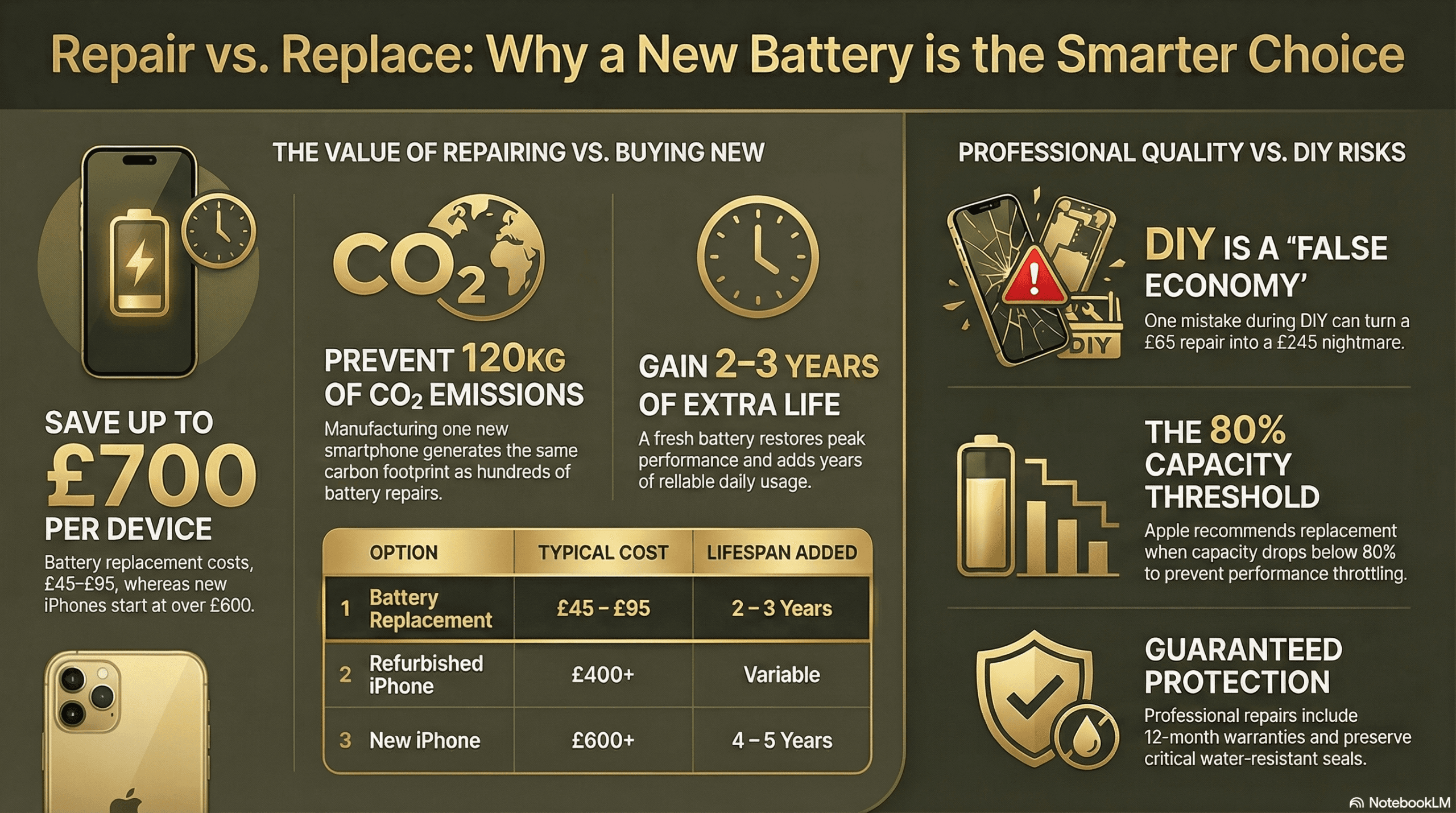
The cost difference between battery replacement and phone replacement creates a compelling financial argument. Professional battery replacement typically ranges from £35-£95 depending on your iPhone model, whilst replacement phones start around £600 for new devices and £400 for refurbished models.
Independent repair shops often charge £45-£80 for battery replacement on popular models like the iPhone 12-14, compared to Apple’s official pricing of £89-£99. Even accounting for the highest-end battery replacement costs, you’re looking at savings of £300-£700 compared to purchasing a replacement device. Professional iPhone battery replacement services provide transparent pricing and quality guarantees that make this financial advantage even more attractive.
The repair versus replace psychology often clouds rational decision-making. New feels better than fixed, yet the underlying technology remains identical. A quality battery replacement transforms your struggling device back to peak performance, delivering the same user experience as a new phone for a fraction of the cost.
Professional repair extends iPhone lifespan by 2-3 years
Battery degradation creates a cascading effect that artificially shortens device lifespan. Professional battery replacement can extend your iPhone’s useful life by another 2-3 years, providing excellent return on investment whilst maintaining optimal performance throughout this period.
When your battery hits 80% capacity or below
Apple recommends battery replacement when maximum capacity drops below 80%. This threshold represents the point where performance throttling becomes noticeable and daily battery life becomes frustratingly short. Apple states that a normal battery is designed to retain 80% of its original capacity at 500 complete charge cycles when operating under normal conditions.
Signs requiring immediate attention include rapid draining, frequent overheating, unexpected shutdowns, and noticeable performance throttling during processor-intensive tasks. These symptoms indicate that your battery can no longer provide stable power delivery, forcing the system to reduce performance to prevent crashes.
Performance improvements you’ll notice immediately
Fresh battery installation delivers immediate and dramatic improvements. Apps launch faster, multitasking becomes smoother, and camera performance returns to original specifications. These changes occur because the new battery provides stable power delivery, eliminating the need for performance throttling.
Users often experience significantly improved battery life, with many reporting a return to all-day usage and extended screen time compared to degraded batteries. Wireless charging efficiency improves significantly, and fast charging capabilities return to manufacturer specifications.
Extending device life significantly reduces environmental impact
The environmental mathematics strongly favour repair over replacement. Manufacturing a new smartphone generates 45-120kg of CO2 emissions, whilst battery replacement produces a tiny fraction of this environmental burden. Keeping devices longer than the average two-year cycle dramatically reduces annual carbon emissions per user.
45-120kg CO2 emissions per new smartphone
Smartphone manufacturing represents one of the most carbon-intensive consumer electronics processes. The production of a new smartphone has an environmental impact approximately three times greater than reconditioning an existing device. These emissions stem from raw material extraction, component manufacturing, assembly, and global shipping networks.
Refurbished smartphone adoption helps avoid significant CO2 emissions and prevents the extraction of substantial amounts of raw materials. Battery replacement contributes to these environmental savings by extending the useful life of existing devices.
Smartphones contain many rare earth elements and require significant water resources
Smartphone manufacturing requires significant amounts of fresh water and involves extracting substantial amounts of rare earth elements. These materials include lithium, cobalt, tantalum, and other precious metals that require environmentally destructive mining processes.
Smartphones contain a significant number of rare earth elements, making them among the most resource-intensive consumer products. Professional repair services contribute to reducing electronic waste by extending device lifespan and adhering to strict e-waste disposal protocols, unlike many failed DIY attempts that result in premature device disposal.
DIY battery replacement risks outweigh minimal savings
YouTube tutorials make iPhone battery replacement appear straightforward, yet reality proves far more challenging. DIY attempts offer minimal cost savings but risk hundreds in additional damage, creating false economy that often exceeds professional repair costs.
Screen damage and component failures from DIY attempts
The most common DIY failure involves screen damage during disassembly. iPhone screens require careful heating and precise separation techniques to avoid cracking. One customer required £180 screen repair plus battery replacement after their DIY attempt, transforming a £65 problem into a £245 nightmare.
Internal component damage proves equally costly. Home button cables, Face ID sensors, and wireless charging coils are easily damaged during amateur repairs. These components often cost more to replace than the original battery replacement would have cost professionally.
Safety hazards from non-certified batteries
Non-certified replacement batteries create serious safety risks. Battery fires are a known risk, especially with cheap replacement batteries that lack proper safety mechanisms. These batteries can overheat, expand, or even explode during normal use.
Using non-certified batteries can lead to overheating, fires, or toxic gas emissions. Quality professional services use batteries that match or exceed original Apple specifications, including built-in safety mechanisms that prevent thermal runaway and other dangerous conditions.
Warranty voiding and water damage risks
DIY battery replacement permanently voids manufacturer warranties and often compromises water resistance. The waterproof seals require precise replacement during reassembly – a process that demands professional tools and expertise.
One documented case involved water damage occurring the week after DIY repair when coffee spilled onto the device. The compromised seals allowed liquid penetration, resulting in total device loss. Professional repairs maintain water resistance through proper seal replacement and pressure testing.
Choosing quality repair services over cheap alternatives
Not all battery replacement services deliver equal value. Quality matters more than price when selecting repair services, as substandard work often requires redoing within months.
Apple vs independent repair shop pricing comparison
Apple’s official battery replacement costs £89-£99 for most iPhone models, whilst quality independent shops charge £45-£80 for equivalent service. The price difference isn’t massive, but independent shops often provide more personal service and faster turnaround times.
Independent shops in smaller towns tend to be more reliable than city operations because they depend on reputation and repeat customers. Lower overhead allows them to match or beat city prices whilst providing superior customer service and attention to detail.
What to look for in battery specifications and warranties
Quality batteries match or exceed original Apple specifications using genuine lithium-ion cells rather than cheaper alternatives. Ask to see battery specifications before installation and verify that capacity ratings match or exceed original equipment.
Warranty terms reveal service quality. Reputable shops offer 12-month warranties on battery replacements, whilst budget operations provide 30-90 days or no warranty. Quality shops stand behind their work because they use reliable components and skilled technicians.
Red flags include prices significantly below market rate, no warranty offered, reluctance to show replacement batteries, or pressure for immediate repair. Legitimate businesses welcome questions about parts quality and provide detailed specifications upon request.
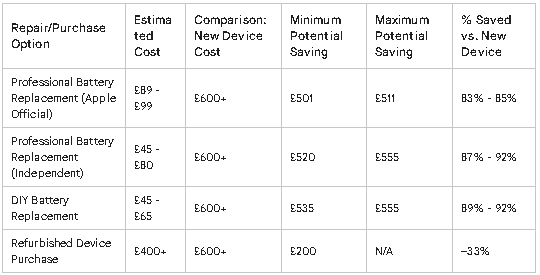
Battery replacement delivers proven savings and sustainability benefits
The evidence overwhelmingly supports battery replacement over device replacement. Financial savings of £300-700, environmental benefits of avoiding 45-120kg CO2 emissions, and performance restoration create a compelling case for professional battery replacement.
Research local repair shops thoroughly, prioritising quality over price. Choose services offering genuine batteries, warranties, and established local reputations. Your device will reward this investment with years of reliable performance, whilst your wallet appreciates avoiding the premature upgrade cycle.
Professional battery replacement transforms struggling devices back to peak performance whilst delivering substantial financial and environmental benefits – making it the smart choice for budget-conscious iPhone owners. For expert iPhone battery replacement services with quality guarantees, visit Mend My iPhone where experienced technicians restore device performance using certified components.
Leave a Reply